


Yehuda Duenyas is a Los Angeles–based, SAG-AFTRA registered intimacy coordinator for film, television, new media, and live performance. With more than 15 years of experience, his latest credits include I Want Your Sex, I Love LA, The Land, Monster: The Jeffrey Dahmer Story, Westworld, and American Gigolo. He is the co-founder of Cintima, one of the few SAG-AFTRA–accredited intimacy coordinator training organizations, and co-founded Flicker, the first film festival dedicated to the work of intimacy coordinators in cinema, which sold out its inaugural year and will return to LA on October 22, 2026. He is also an Emmy Award–winning experiential director with clients including Spotify, Netflix, Google, YouTube, Walt Disney Imagineering, HBO and Showtime. As a pioneer in intimacy for entertainment with a long-standing commitment to LGBTQIA+ representation, Duenyas has been profiled by The New Yorker, Vanity Fair, and many more. He’s recently appeared on CNN’s The Assignment with Audie Cornish and Savage Lovecast with Dan Savage.
I heard sex is over.
Or at least that seems to be a popular story lately. Last year, a widely circulated feature in GQ argued that nudity in film and television was effectively finished, another casualty of cultural reckoning, changing tastes, and the economics of an exhausted industry. Around the same time, a wave of reporting based on a UCLA study about Gen Z’s sexual habits arrived to reinforce the point: younger people are having less sex, showing less interest, and disengaging from physical contact. Depending on who you ask, the conclusion is simple. Sex has become too risky, too fraught, too complicated, too scary, or maybe just irrelevant.
I don’t feel that’s what’s happening. What’s disappearing is our tolerance for bad intimacy.

We are not living in a world starved for erotic imagery. If all someone wants is nudity or explicitness, there is no shortage of it. What feels harder to find now, onscreen and off, is intimacy: tension, vulnerability, emotional risk, tenderness, awkwardness, longing, desire that reveals character rather than just anatomy. This is not a niche appetite. This is the oldest human hunger there is. None of us is here without an act of intimacy having taken place, whether loving, complicated, or painful.
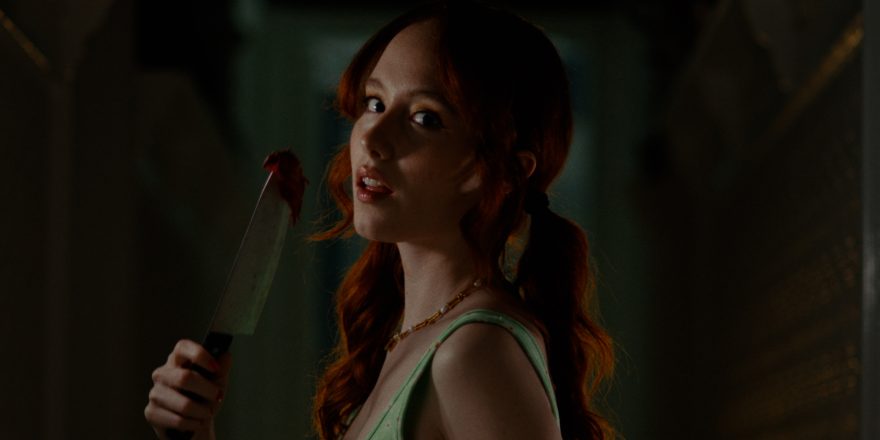
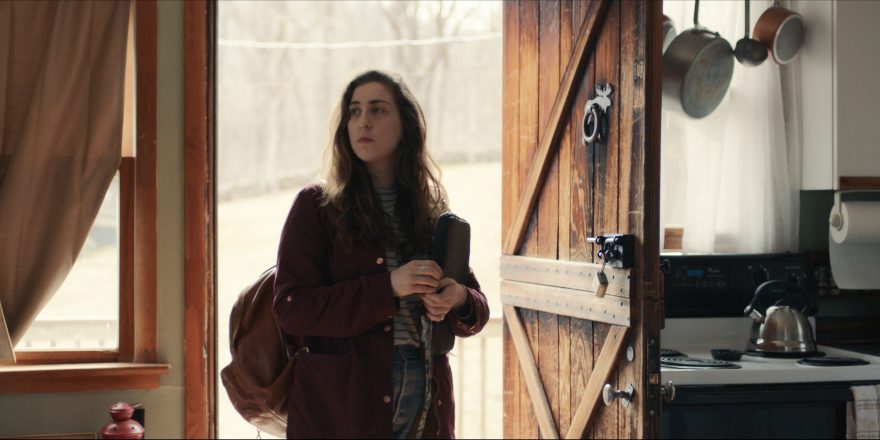
And despite all the clicky headlines and hand-wringing, intimacy has hardly vanished from the screen. In just the past year, films like Babygirl, Pillion, Dreams and the upcoming Blue Film, along with series like Heated Rivalry and DTF St. Louis, have shown that audiences are still drawn to stories shaped by desire, vulnerability and emotional risk. I Love LA, which I contributed intimacy coordination to, opens with a sex scene during an earthquake, pairing spectacle with vulnerability. Gregg Araki’s I Want Your Sex, for which I served as intimacy coordinator, premiered to a sold-out crowd at Sundance. Audiences are not done with intimacy. They are done with intimacy that feels empty, careless or emotionally dead.
I have spent much of my career inside that difference.

I began choreographing intimate scenes in 2007, long before the role had a name. I was working in experimental performance in New York, dancing burlesque at The Box, and creating in rooms where vulnerability was raw, bodies were close and the audience was often only inches away. In those spaces, consent, precision and emotional awareness were not woke ideals. They were survival skills. If something was false, coercive or unfocused, you felt it immediately. So I made a commitment early on: no surprises, no vagueness, no panic disguised as bravery.
That commitment shaped my process before there was institutional language for the job, before the wider culture had begun to recognize that intimate scenes might deserve the same rigor we bring to everything else on set.
This contradiction has always fascinated me.

Film sets are built around planning. Car crashes are pre-visualized down to the inch. The use of firearms is rehearsed and regulated. Even a broken chair has a prop master. Yet for decades, scenes involving sex, desire, vulnerability and power were often left to instinct. I kind of get it. I mean, not everyone knows how to fight or crash a car, but everyone knows how to have sex, right? What I don’t get is the expectation that actors should just figure it out in real time, as if ambiguity around bodies and boundaries were somehow artistic. Uncertainty has its place in art-making, don’t get me wrong. But leaving vulnerable physical action vague and undefined, or worse, coercive and intentionally manipulative is not the same thing as creative discovery.
A car crash becomes cinematic through planning and trust. A love scene becomes transcendent the same way.
One of the biggest misconceptions about intimacy coordination is that it exists to limit the work, to make it safer at the expense of being alive, to bureaucratize what ought to remain spontaneous. I’ve heard the fear in many forms: that too much discussion kills chemistry, that boundaries flatten desire, that choreography sterilizes performance. What I have seen, over and over, is that structure allows people to go further.

When actors are not spending energy wondering what is about to happen to their bodies, they can spend that energy on performance. When a director has clarity around the boundaries, beats and visual language of a scene, they are freer to direct it with specificity. When camera, wardrobe, assistant directors and production are aligned, the set becomes calmly focused around the work instead of awkwardly wishing it would end. The scene can breathe. It can deepen. It can become repeatable without losing its pulse.
I’ve had actors tell me after a shoot that they were able to take bigger risks because they knew exactly where the edges were.
That is not a restriction. That is the permission structure that makes real freedom possible.
And intimacy, of course, is not only sex.
This is another place where the conversation gets flattened. People hear “intimacy” and think only of nudity or simulated sex. Ask someone out in your daily life today to define the word “intimacy.” You likely won’t get the same answer twice. Intimacy is present in some of the most charged moments we can stage: seduction, yes, but also grief, shame, fear, dependency, rupture, birth, death, love, anger, humiliation, tenderness, violence. Intimacy lives anywhere human closeness raises the emotional stakes. It is one of the great engines of storytelling.

A well-made intimate scene is never only about bodies. It’s about character. It’s about power. It is about who reaches and who withdraws, who wants and who withholds, who protects, who performs, who dissociates, who surrenders, who longs to be seen. It is one of the clearest places in media where subtext becomes visible.
That is why this work matters to me.
My job can involve conversations with actors about boundaries and consent. It can involve collaborating with directors to understand the emotional and visual logic of a scene. It can mean working with wardrobe on modesty garments and barriers, with camera on framing and exposure, with A.D.s on logistics, with production on creating the conditions for a closed set. It can mean building choreography that holds across multiple takes while still feeling spontaneous and alive. Sometimes it means being hands-on. Sometimes it means stepping back once everything is in place.
The point is not to control intimacy. The point is to support it with enough craft that it can actually land.
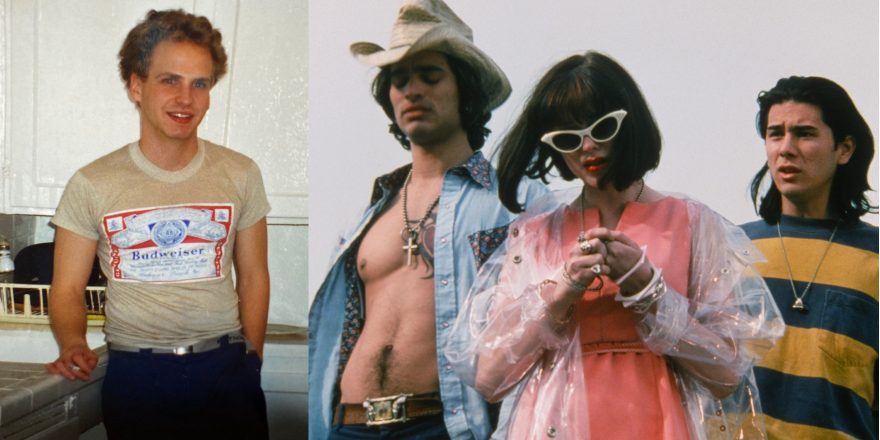
I mentioned that I recently served as intimacy coordinator on I Want Your Sex, a first for director Gregg Araki, a filmmaker whose work has long been steeped in desire, eroticism and all the beautiful, volatile contradictions intimacy can carry. Watching a director with such a singular voice embrace the process only confirmed something I have known for years: this work does not diminish a vision. It supports vision. It gives artists a structure sturdy enough to hold risk, contradiction and emotional truth.

That is the part I think the broader culture is still catching up to.
We have easier access than ever to sexual imagery. But access is not intimacy. Visibility is not intimacy. Explicitness is not intimacy. Intimacy is what gives those things meaning. It is what turns a scene from display into revelation.
And I suspect that is why audiences still respond so powerfully when intimate storytelling is done well. Not because it is provocative for provocation’s sake, but because it offers something genuinely rare: contact. Recognition. The feeling that something onscreen understands the strange ache of being human.
Hollywood has always evolved alongside its audience. Technology changes. Distribution changes. Taste changes. But people are still drawn to stories about connection, desire, love, shame, grief and longing. What has changed is the expectation around how those stories are made. There is more awareness now. More care. More language. More understanding that vulnerable work deserves real support. Audiences can feel that difference. Actors can feel it. Directors can feel it.
So if it wasn’t obvious already, no, I don’t think sex is over.

I think we are becoming less willing to settle for intimacy that is empty, careless or dissociated from human truth. And that feels more like an evolution, not an ending.
In an era of virtual production, algorithmic entertainment and AI-assisted world-building, intimacy may be one of the few things that matters even more than it used to. Not because it is scandalous. Not because it is edgy. But because it remains one of the clearest ways we recognize ourselves in one another.
We are starving for contact, not content. The work now is to meet Intimacy with the same level of craft, attention, and intention we bring to everything else on screen.
A love scene is not an accident. It never was. The difference now is that more of us are finally willing to treat it that way.
Featured image, showing Cooper Hoffman and Olivia Wilde in I Want Your Sex, is by Lacey Terrell.